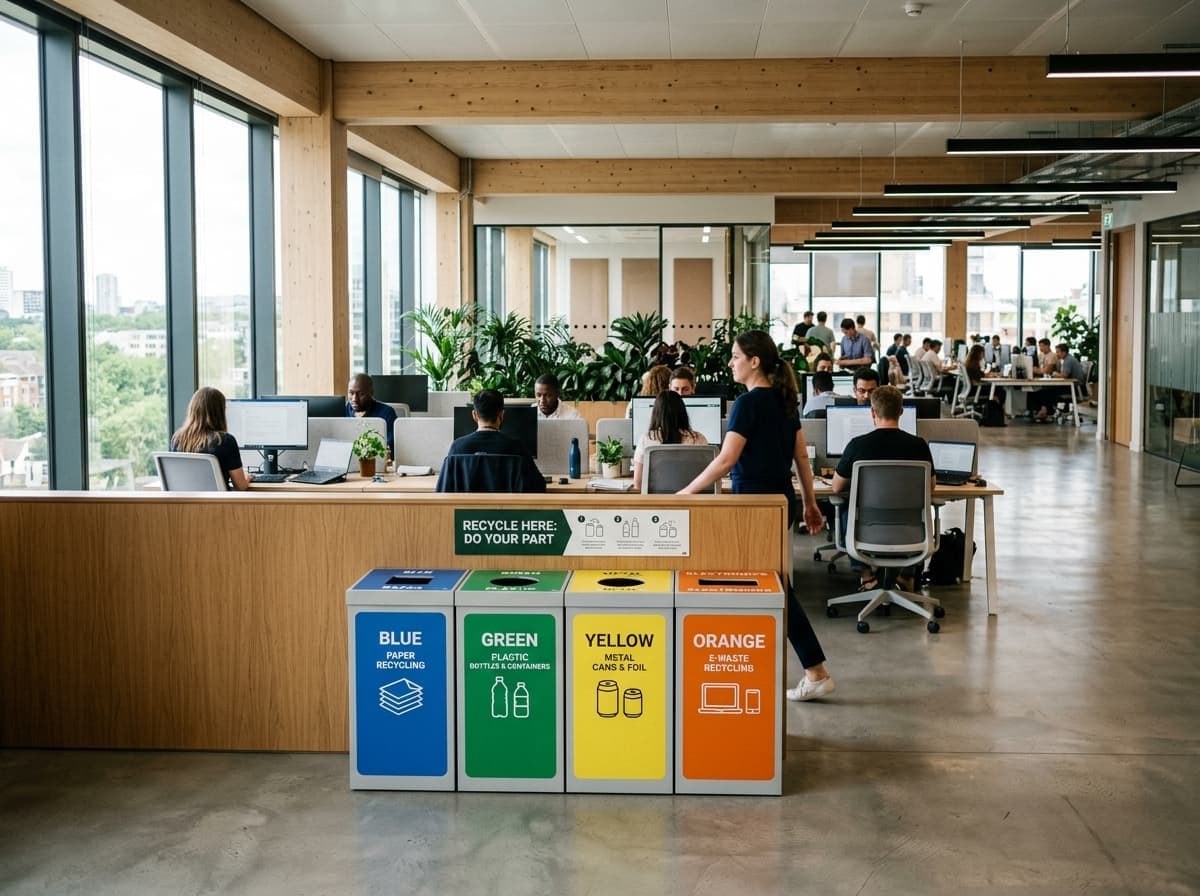
ESG reporting has shifted from a nice-to-have to a board-level priority for businesses of every size. And while the "E" in ESG covers a broad range of environmental metrics, waste management and recycling are among the most tangible, measurable, and improvable. If you already have a recycling partnership, you're sitting on a data source that can meaningfully strengthen your sustainability reporting — you just need to know how to use it.
#What ESG Frameworks Want from Your Waste Data
The major ESG reporting frameworks — GRI (Global Reporting Initiative), SASB (Sustainability Accounting Standards Board), and CDP (Carbon Disclosure Project) — all include waste-specific disclosure requirements. GRI 306, the most widely used waste standard, asks for total waste generated, waste diverted from disposal (by type and method), and waste directed to disposal (by type and method).
#Turning Recycling Data into ESG Metrics
Your recycling partner's monthly reports contain the raw data you need. The key metrics to extract are: total weight of material diverted from landfill (your diversion rate), breakdown by material type (paper, plastic, metal, e-waste), and the carbon-equivalent impact of your recycling (which your partner can calculate using EPA WARM model coefficients). These numbers map directly onto GRI 306-4 (waste diverted) and contribute to your Scope 3 emissions calculations.
#From Data to Disclosure
The gap between "we recycle" and a credible ESG disclosure is just structure. Standardize on one partner so your tonnage is measured consistently, convert it to CO₂e with a recognized model, and report both the raw and translated figures against the GRI 306 categories. Done once, the template repeats every quarter with almost no extra effort.
If your streams are scattered across vendors or you don't yet have clean baseline data, an environmental consulting engagement can map your waste, set targets, and stand up the reporting — and our full range of recycling services feeds that data automatically.