Scrap metal pricing can feel opaque if you're not in the industry. Prices change daily, vary by metal type and grade, and are influenced by everything from Chinese manufacturing demand to domestic energy costs. But the fundamentals are straightforward once you understand the system. This guide gives business owners and facility managers a clear framework for understanding scrap metal value — and for recognizing when you're getting a fair deal from your recycling partner.
#How Scrap Metal Prices Are Set
Scrap metal pricing starts with global commodity exchanges. Ferrous metals (steel, iron, stainless steel) are benchmarked against published indices like the AMM (American Metal Market) and regional mill buying prices. Non-ferrous metals (copper, aluminum, brass, lead) track the London Metal Exchange (LME) and COMEX futures. Your local recycler's buy price is derived from these benchmarks, minus processing costs and margin.
#Ferrous vs. Non-Ferrous: The Value Gap
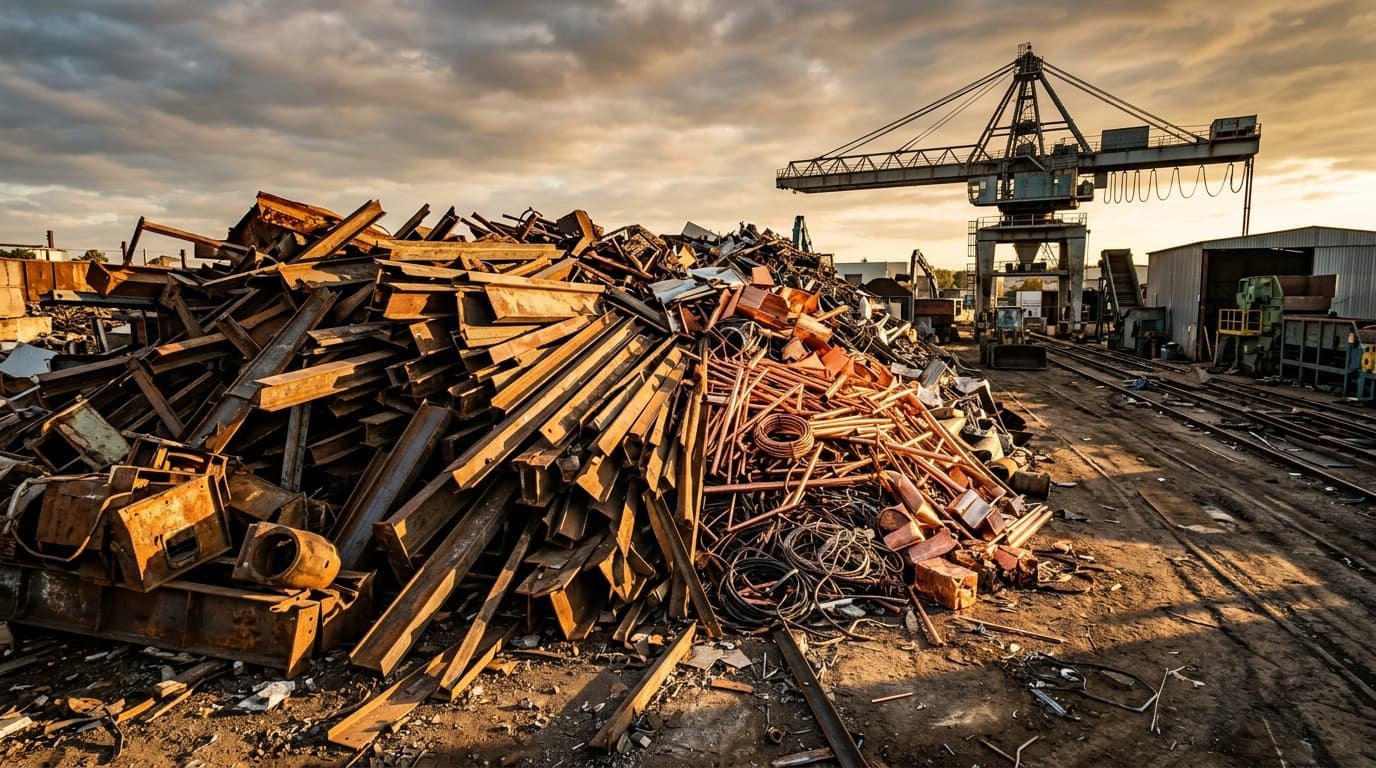
The most important distinction in scrap metal is ferrous (contains iron, attracted to magnets) versus non-ferrous (everything else). Ferrous metals — steel beams, iron pipes, automotive bodies — are priced per ton and typically range from $150 to $350 per ton depending on grade and market conditions. Non-ferrous metals are priced per pound and can be dramatically more valuable: clean copper wire commands $3.00–$4.50/lb, aluminum extrusions $0.50–$0.90/lb, and brass fittings $1.50–$2.50/lb.
| Metal Type | Unit | Typical Range | Key Factor |
|---|---|---|---|
| Steel (mixed) | Per ton | $150–$300 | Mill demand, grade purity |
| Copper (#1 bare bright) | Per pound | $3.50–$4.50 | LME price, wire vs. scrap |
| Aluminum (extrusion) | Per pound | $0.60–$0.90 | Alloy type, cleanliness |
| Brass (yellow) | Per pound | $1.50–$2.50 | Zinc content, contamination |
| Stainless steel (304) | Per pound | $0.40–$0.70 | Nickel content, grade |
#How to Get Better Prices
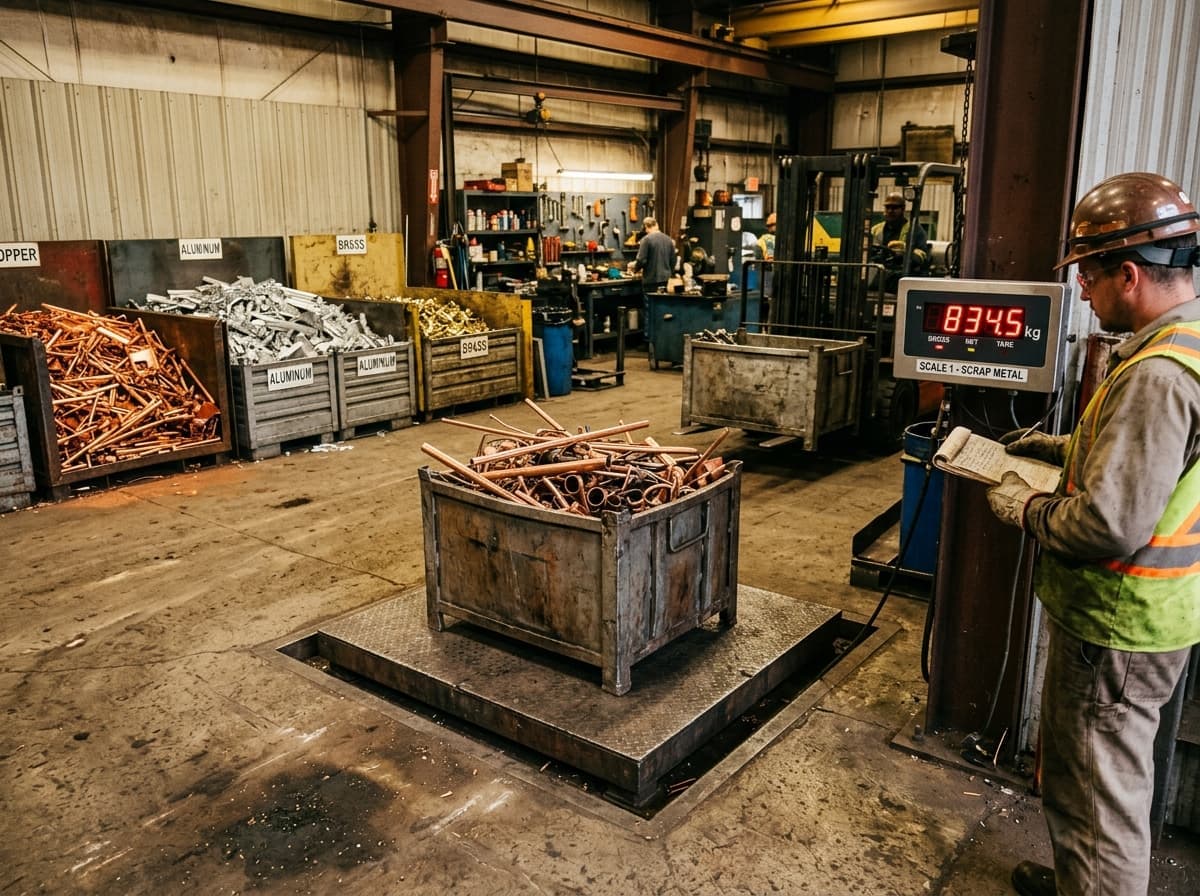
The single most effective thing you can do to improve your scrap value is sort your metals before your recycler picks them up. Mixed loads of ferrous and non-ferrous metals together will be priced at or near the lowest-value material in the load. Separating copper from steel from aluminum from brass — even roughly — can increase your per-load revenue by 40–60%.
#How to Read Your Deal
Fair pricing is transparent pricing. Before you commit to a recycler, make sure each load is graded against recognized ISRI specifications, weighed on certified scales, and documented with a printed ticket showing the weight, grade, and per-unit rate. For recurring volume, negotiate a pricing formula tied to a published benchmark (for example, "LME copper minus a fixed processing fee") rather than accepting a different flat number each visit — that way your price rises and falls with the market instead of with the recycler's mood.
That combination — benchmark-referenced rates, ISRI grading, certified weighing, and a ticket you keep — is exactly what our scrap metal recycling service provides for businesses across metro Atlanta.